site currently under deep renovation... !!!!
I am an artist and an educator working primarily in photography and digital media.
john@basearts.com <- email here
jsappington@santarosa.edu<- or here.
---for current news in photography, art, technology and design
go to :
https://blog.basearts.com
https://www.lensculture.com/john-sappington
https://www.instagram.com/johnsappington
PERSONAL Portfolio
Portfolio - rev. 2022
Working Journal - rev. 2025
Curriculum Vitae - rev.2025
Course Descriptions Working - rev. 2025

Photography Services : Individual photography Same-day photo service Online photo ordering Online service consulting Copying Corporate photography Specialty printing Printing services Digital printing Family and group Flyers & brochures Passport photography Posters Printing Photo printing Letterhead & business cards Headshots and portraits Engagement portraits Scanning Photo editing Photo albums Digital Photo Restorations Color or Black & White Print, Slide and Negative Scanning Restoration of Photos Urgent photos |
Digital Systems Consulting : Systems, design, interaction and solutions for the arts, education and business.
707.332.0987 --- photography, technology and education in the bay area since 1992 education analogue photography |
basearts productions Cultures: From the Annotated Self
These images are from "The Annotated Self," a project that includes three separate photographic series dealing with issues of consciousness, psychological identity and memory. The source for the images in the "Cultures" series are photographs of doodles drawn on the margins of notebooks, day planners, post-its and scattered notepads. Drawn mostly while on the phone and without any artistic intention, they constitute a sort of automatic writing. The doodles are distilled from an unconscious creative urge which, as I see it, is linked to the basic biological process that enables the evolution of life. -Sammy Cucher --- [ the clearing ] 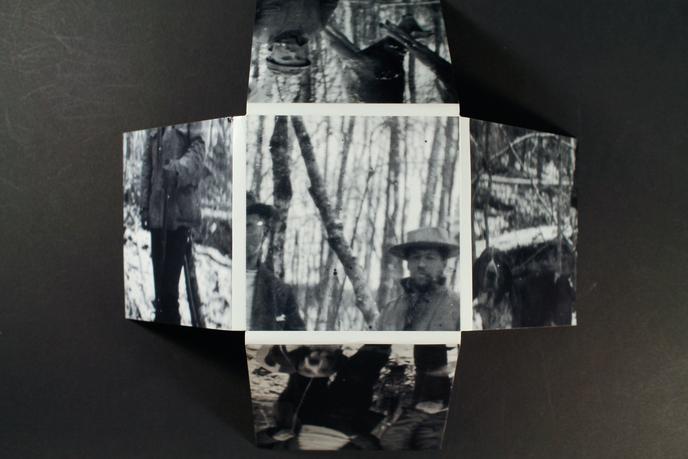
-----Press Release Sept. 1994 - [the clearing] is an interactive computer artwork that explores the construction of cultural meaning through the language of the technologicallly mediated Western news' representation of the conflict in Bosnia. with the assisstance of the mouse, viewers explore the surface of a moving hunting photograph. By this action, the viewer scans a range of topics on Bosnia and can choose any of 30 categories to examine news quotes set against the photograph. Three separate points of view are given. The Bosnian Muslims' , the Serbs' and outside news commentaries. The viewer's experience of information search through this computer program interface is designed to reveal the traces of vision technologies' origins in military and medical applications - a particular kind of seeing that can be described as "search and destroy" or " hold still while I examine" . Keywords: world event, sub-text, Balkan, dissemination, information, ethnic genocide, Western interests, media industry, Muslim, frame of reference, Europe, historical memory, narratives in context. https://www.mat.ucsb.edu/~g.legrady/glWeb/Projects/clearing/clearing.html |
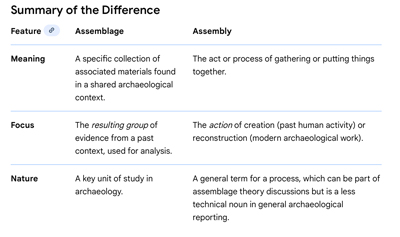
Brookside Assembly 2020-25 Paleo-Indian Period ~13,500 ? c. 8,000 BCE (earlier dates like 20,000 BP are debated but possible in some models) Archaic Period ~8,000 ? c. 1,000 BCE (regional variation) Woodland Period (Eastern North America) ~1,000 BCE ? c. 1000 CE (AD 1000) Late Prehistoric / Mississippian (in some regions) ~AD 800 ? 1600 Thus, while the terms "Paleolithic" and "Mesolithic" are part of a European/Old World chronological system, the equivalent timeframes and technological stages in North America (Paleo-Indian and Archaic periods) both involved the use of obsidian, chert, and basalt for tool production.[Paleolithic (“Old Stone Age”) ~3.3 million years ago ? c. 10,000 BCE Mesolithic (“Middle Stone Age”) ~10,000 ? c. 6,000–4,000 BCE (varies by region) Neolithic (“New Stone Age”) ~6,000 BCE onward (introduction of agriculture)]
|